A few years ago we entered the new millennium with great fears and even bigger hopes. When our electronic devices managed to survive ”attack” of millennial bug (1999/2000), we started celebrating yet another era of reason and discovery. Internet was presented as a pure embodiment of the neoliberal values, providing freedom of communication, trade and services (Curran, Fenton, Freedman, 2012) creating a global network available for everyone wealthy enough and lucky enough to live in the place reached by said globalisation. What is left from those bold claims of creating a new utopian world for future generations?
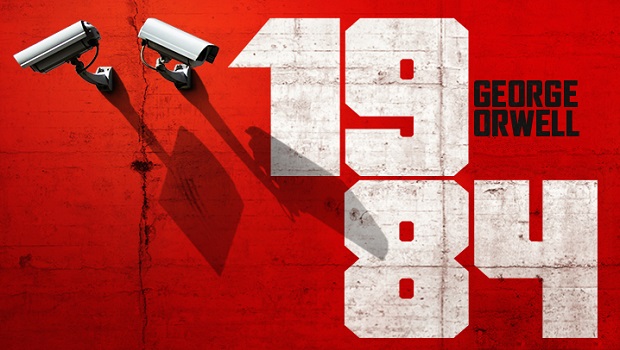
Not much. Georges Orwell’s’ ”Nineteen eighty-four” is frequently topping book sales charts after every reveal of a significant violation of privacy or proof of ubiquitous surveillance (2013, 2017). Whistleblowers, political activist and hackers regularly provide us with the new evidence of “alternative facts” used by governments, companies storing and sealing our data, and entrepreneurs creating false economic investments online. Not to mention substantial political controversy connected to the last presidential election held in the United States and potential interference of Russian state founded hackers in their outcome. (2016)
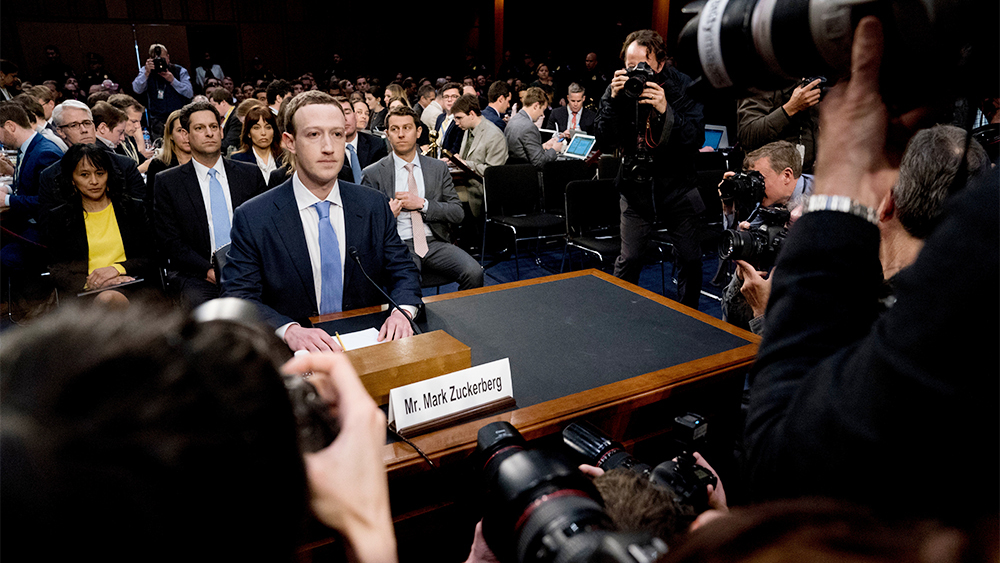
Global village on the edge of the second decade of the new millennium is a very confusing place to be, ”[…] a place of very arduous interfaces and very abrasive situations.” (McLuhan, 1977) . We changed the tangible threat of nuclear mushroom clouds to omnipresent peace and prosperity of silver clouds of information. Dynamic of geopolitical powers radically changed zones of influence, creating new borders and new ”internet nation”. Those changes are not necessarily obvious even for some of the world leaders. Google CEO Sundar Pichai during last year’s congressional hearing was answering questions such as: ”So, it’s not some little man sitting behind the curtain figuring out we’re going to show to the users?” or explaining that”[…]iPhone is made by a different company”.
The public is not significantly different, as pointed by Malevich (2002), we are often illiterate in the language of new media and new technology. Many of older generations struggle with quite a fundamental aspect of the digitality, so even mainstream technology is not using technical vocabulary to do not confuse its users. Many surveys are presenting similar results proving that the large part of the public is not aware of internet physicality.
This creates an alarming situation. If the majority of people perceive the internet as a purely non-physical, almost organic thing, they also think it is impossible to control it. ”Society is experiencing the illusion of inclusion.” (Teneyuca, 2011). Therefore, they tend to undermine potential danger and influence of digital on reality (Jonathan Albright’s research). To visualise that problem we can come back to the cloud metaphor; we can predict clouds and their movement, but we can not create or influence them. They are a structure, which is out of reach, cannot be easily altered to fulfil one’s expectation. However, it can be accurately argued that meteorological metaphor may not be the best way to describe complicated network… or that we already possessed the technology not only to create clouds, but we can also ”command them” to rain spreading false informations.

Jonathan Albright’s “Micro-propaganda” network of 117 “fake news,” viral, anti-science, hoax, and misinformation websites.
The technical dictionary has an interesting correlation with the water: the flow of information, leaks of data, frozen software or mentioned earlier clouds. However, this bond is creating a lot of misunderstanding. If we want to think about the internet as a cloud, we should visualise the storm cloud at the end of drought rather than a small cloud on a sunny day. Our monsoon cloud of information is a massive force with the equal potential to create and nurture, as well as, cause damage and chaos. Chun (2017) rightly pointed out that technology of freedom is has become a new form of control and one of the biggest challenges of scholars and educators is presenting, the gravity of decisions concerning new media regulations. We need to understand that”our media matter most not when they seem not to matter at all” (Chun, 2017). When our habits replace concerns and caution, automatic and unconscious action can lead us into all sorts of traps.
Considering that should we start to believe all radical articles and tv news about digital technology or can we still treat them as a fearmongering? According to the research of Hans Rosling, Swedish academic and statistician, people generally do not know global long term trends and are likely to see a world more pessimistically than truth. Many of the information presented in mainstream media is also distorted to support publishing company agenda or create the biggest number of views and likes, championing the most shocking style of reporting. Therefore, we should probably try to look for middle ground, between completely cutting off yourself from the technology and accepting every possible price of digital presence. We can Future of digital is neither optimistic nor pessimistic; it is what we, users and creators, will decide to do with it.
https://www.nytimes.com/news-event/russian-election-hacking https://www.washingtonpost.com/opinions/the-new-normal-isnt-normal-at-all/2018/11/20/a3907cc8-ecff-11e8-96d4-0d23f2aaad09_story.html?noredirect=on&utm_term=.0c2894bc8b17 https://www.amazon.com/1984-George-Orwell-ebook/dp/B06ZYFD3XG
Chun, W. (2017) Updating to Remain the Same: Habitual New Media, Cambridge, Massachusetts: MIT Press
Freedman, D., Curran, J., Fenton, N. (2012) Misunderstanding the Internet, London: Routledge Manovich, L. (2002) The Language of New Media, Cambridge, Massachusetts: MIT Press Powers, S. M., Jablonski, M. (2015) The Real Cyber War: The Political Economy of Internet Freedom, 1st ed. Champaign, Illinois: University of Illinois Press
Rosling, H., Rosling Rönnlund, A., Rosling O. (2018) Factfulness: Ten Reasons We’re Wrong About the World – and Why Things Are Better Than You Think, New York: Flatiron Books Schmidt, E., Cohen, J. (2013) The New Digital Age: Reshaping the Future of People, Nations and Business, London: John Murray

 Notes on the Digital Culture